VINYL POOLS
Pool Cover Options That Protect a Vinyl Investment
Key Takeaways
- A cover is attach gear that protects the vinyl investment—UV dose, oak debris, chemistry stress, and heat—not a luxury afterthought.
- The “best” cover depends on how you live outside: daily swimmers, weekend users, and travel weeks need different habits.
- North Louisiana problems are heat, UV, pollen, leaves, and clay dust—plan for those, not a generic northern winter catalog.
- Covers pair with (not replace) weekly chemistry, brushing, and sensible liner care.
- Soft next step: fold cover choice into a free 25-minute Google Meet design consult with the rest of the yard plan.
You don’t buy a vinyl liner pool for the liner. You buy evenings. Saturday mornings. A place the kids live in July without a drive to someone else’s HOA pool.
A cover helps you keep that life. It’s attach work sold around the water—same family as decking, lighting, and screens—not a random accessory aisle impulse.
This guide is for Shreveport–Bossier homeowners who want cover options that protect a vinyl investment without turning maintenance into a second job.
Why covers matter more in North Louisiana than people admit
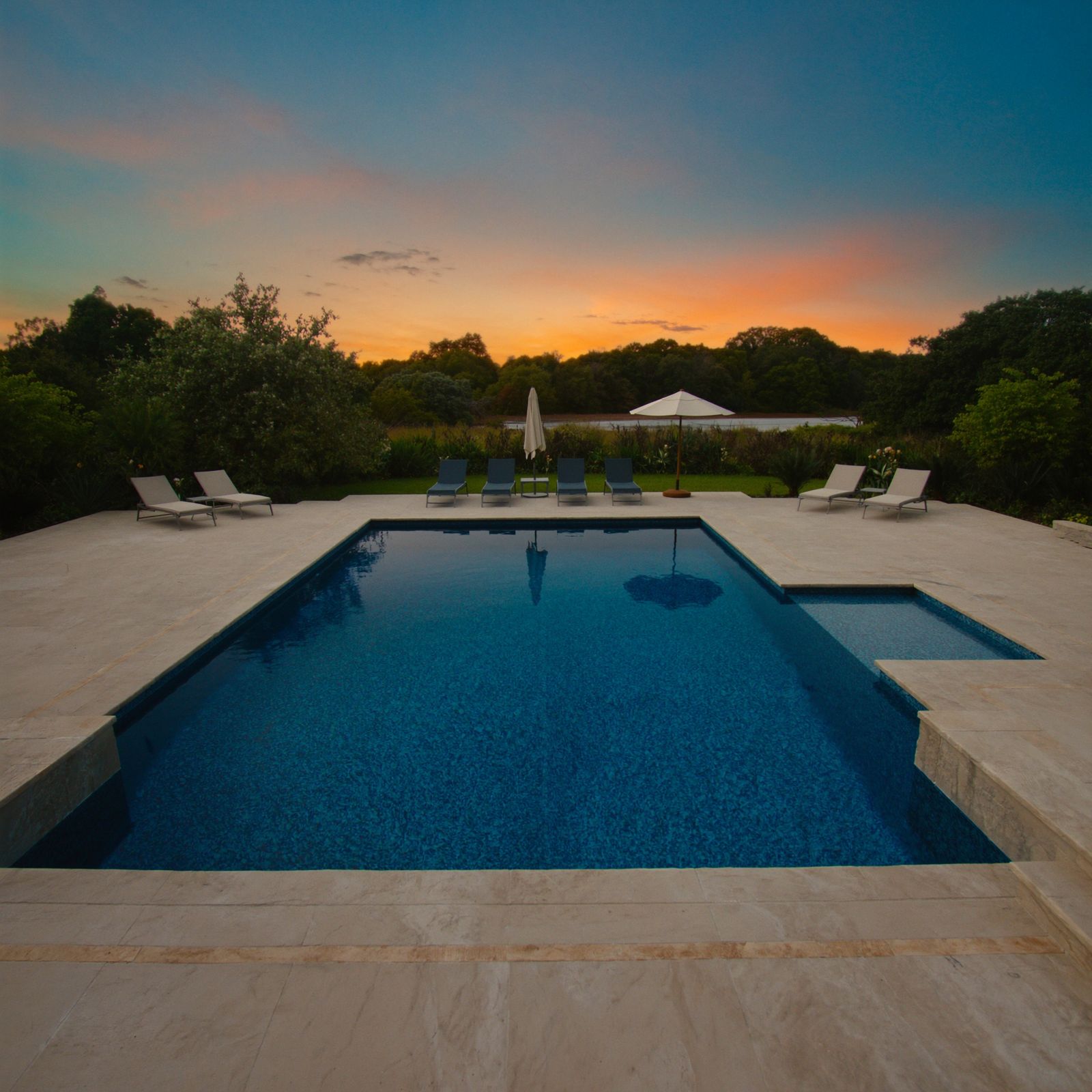
Our summers are long. UV is strong. Oaks throw tassels and leaves like confetti. Clay dust rides every breeze. A pool that sits uncovered from April through October takes a bigger UV and debris hit than a pool with a cover when nobody’s swimming.
Covers help with:
- UV load on the liner when the yard is empty
- Debris (leaves, pollen, acorns) that stains and clogs if ignored
- Water temperature and evaporation habits (product-dependent—ask for the model’s real behavior)
- Safety routines when used as part of a whole barrier plan (fence + alarms + adult habits—not a magic force field)
- Chemistry stability by reducing the junk that eats sanitizer
What covers do not do: replace weekly testing, brushing, or a sound install. A dirty cover dragged across grit can scratch a liner. Habits still win.
Start with how you live—then pick a cover type
Soft curiosity beats a product brochure.
- Do you swim most evenings or mostly weekends?
- Are you gone for summer travel weeks?
- Kids and pets in the yard when the pool’s “closed”?
- Is a future screen enclosure already in the plan?
- Who will actually put the cover on—you, the kids, a service tech?
It depends how you live outside. A cover that looks perfect online but takes twenty minutes of wrestling every night won’t get used. Unused gear doesn’t protect anything.
Cover options homeowners actually compare
We’re keeping this kitchen-table. No brand wars. No invented warranty years. Match the job to your life, then shop models with your builder or retailer.
1) Solar / blanket-style covers
Job: Hold heat, cut evaporation, light debris shield when you’re between swims.
Good for: Families who swim often and want something they can pull on after dusk.
Watch-outs: Can collect water/debris on top; need careful handling so grit doesn’t grind the liner; not a primary safety barrier.
2) Mesh safety covers (often seasonal / anchored)
Job: Debris pass-through mesh with a taut, anchored feel when installed for the off-season or longer idle stretches.
Good for: Travel seasons, storm debris weeks, yards that want a secure top when the pool isn’t in daily use.
Watch-outs: Install/removal is a real event; confirm anchoring plan with deck layout; still not a substitute for fencing and adult supervision when the cover is off.
3) Solid safety / winter-style covers
Job: Block debris and light more completely during idle periods.
Good for: Longer idle stretches when you want leaves to stay off the water.
Watch-outs: Standing water on top needs a plan; removal timing matters before swim season; chemistry shouldn’t be abandoned “because it’s covered.”
4) Automatic / reel systems (when the design supports them)
Job: Make covering a button-or-reel habit so it actually happens.
Good for: Owners who know they’ll skip a manual cover every night.
Watch-outs: Needs design space, power (for some systems), and a deck plan that doesn’t fight the mechanism. Decide early—retrofits are harder than designing the hub correctly the first time.
5) “We’ll just use a screen instead”
A screen enclosure is a different tool. Screens crush bugs and pollen load on the deck. They don’t replace a cover’s UV/debris job on the water the same way. Many NWLA families eventually want both—cover habits now, screen when the investment and calendar allow. Phasing is normal.
Quick compare table
| Cover style | Best at | Daily-swim friendly? | Safety role | Design note |
|---|---|---|---|---|
| Solar / blanket | Heat + light debris | Yes, if light enough to use | Low—habit tool, not barrier | Easy to buy; easy to misuse with grit |
| Mesh safety | Debris + idle security | Usually no (on/off event) | Higher when properly installed | Plan anchors with deck |
| Solid safety / winter | Max debris block when idle | No | Higher when properly installed | Plan water-on-top management |
| Auto / reel | Consistency | Yes, if designed in | Varies by product/rating | Design early with the pool hub |
| Screen enclosure | Bugs/pollen on living space | N/A (different tool) | Different job | Attach around pool; phase OK |
No firm prices here. Cover cost rides equipment package, size, and deck details—personalize at the consult and estimate, not in a blog table.
Protecting the vinyl investment (liner + structure)
Think of two clocks:
- Structure — polymer panel systems built for humid southern climates (on our vinyl page: manufacturer lifetime structural warranty on Hydra polymer panels; Blue Tide lifetime workmanship on install).
- Liner — wear surface with a published 20-year manufacturer warranty and a real-world life that still depends on sun, chemistry, and care.
A cover is one of the few habits that directly cuts UV and debris abuse on that liner. That’s protecting the investment—not being fussy.
Practical liner-friendly cover rules:
- Brush grit off before you drag. Sand and clay dust scratch.
- Don’t treat the liner like concrete. Soft tools only.
- Cover when you’re gone. Especially peak UV weeks.
- Don’t use the cover as an excuse to ignore water. Test on a rhythm that matches swim season.
- Store it where it doesn’t bake into a brittle taco on the hottest concrete corner if the manufacturer says otherwise—follow the product care sheet.
For the bigger vinyl vs concrete framing, see gunite vs vinyl and shotcrete vs vinyl.
Design the cover into the backyard hub
Covers fail when the yard wasn’t planned for them.
Ask during design:
- Where does the cover live when the pool’s open?
- Do anchors fight the coping pattern you love?
- Will a future outdoor kitchen or screen block reel paths?
- Is the deck wide enough for safe walk-around with the cover on?
- Who trains the family on the routine the first week?
Life-first design means the cover is part of evenings that work—not a tarp you trip over.
Safety without scare tactics
We won’t invent ASTM numbers or claim a cover “makes a pool childproof.” Nothing does that alone.
Honest stack:
- Legal fencing / barriers as required in your parish or city
- Alarms and door habits that match your household
- Adult supervision when the cover is off
- A cover used as one layer when the pool is idle—not a babysitter
If safety is your top driver, say that on the consult. We’ll talk the whole system, not a single product.
Phasing the investment
Plenty of families swim first, then layer.
Example order (not a package—just a pattern):
- Vinyl pool + basic deck + required barriers
- Cover that you’ll actually use
- Lighting and seating that make evenings stick
- Screen or kitchen when the calendar and investment allow
Financing overviews live on financing—no APR figures in this post. The point is sequencing so the cover isn’t the thing you skip until the liner has already taken two hard summers.
FAQ
Do I need a pool cover with a vinyl liner in Louisiana?
You can own a vinyl pool without one. You’ll protect the investment better with a cover habit that matches how often you swim—especially under NWLA sun and oak debris.
Will a cover stop my liner from aging?
It slows UV and debris abuse. It doesn’t freeze time. Chemistry and soft care still matter. No cover “guarantees” a warranty year count.
What’s the difference between a solar cover and a safety cover?
Solar/blanket types are daily comfort and evaporation tools. Safety covers (mesh or solid) are typically anchored systems for idle periods. Different jobs—don’t buy one expecting the other.
Can a screen enclosure replace a cover?
Screens help bugs and pollen on the living space. They don’t automatically do the same water/UV job as a cover. Many yards eventually want both, phased.
Should I buy the cover with the pool or later?
If you know you’ll travel or hate fishing leaves weekly, design it in early—especially automatic/reel paths. Manual solar covers are easier to add later than systems that need deck real estate.
Will a cover stain or damage my liner?
Misuse can. Dragging grit, sharp edges, or harsh chemicals on the cover can mark a liner. Clean handling and manufacturer care instructions matter.
Are automatic covers worth it?
If you’ll actually use the button and the design supports the mechanism, consistency is the value. If the deck can’t host it cleanly, a simpler cover you’ll use beats a fancy one you fight.
Do you install covers at Blue Tide?
Cover selection is part of the outdoor living / pool conversation. Bring your must-haves to a free 25-minute Google Meet design consult and we’ll fit the cover to the hub—not as a lonely SKU.
Soft next step
If you’re planning a vinyl pool—or already swimming and tired of fishing oak tassels—talk cover options while you talk life. Book a free 25-minute Google Meet design consult and we’ll match the cover to how you actually use the yard.
Schedule your free estimate / consult · Call (318) 242-8225
Don’t lose another Louisiana summer to a backyard that almost works.